Ōmārama TOP10 Holiday Park - Turning hands-on waste sorting into meaningful impact
September 2026
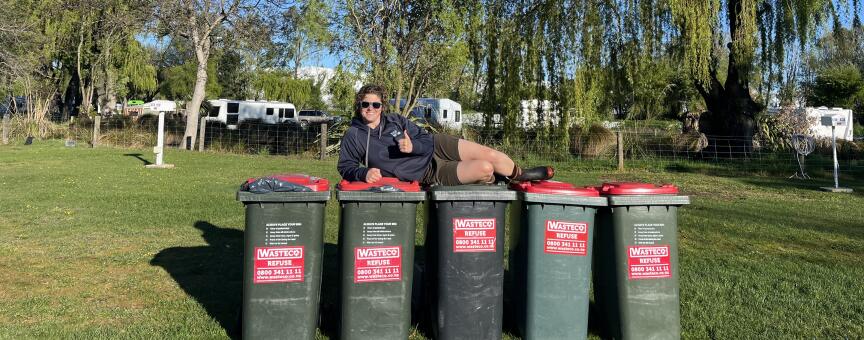
At Ōmārama TOP10 Holiday Park, the recycling system was in place, but recyclable material was still ending up in the rubbish. Rather than accept that as part of running a busy holiday park, owners Natalie and Erwin Beiboer decided to take a more hands-on approach. For Natalie, that means sorting by hand through rubbish collected from around the park to recover what can still be recycled.
Since November 2024, that self-led effort has turned a behind-the-scenes task into a measurable reduction in waste, keeping recyclable material out of landfill and creating savings that can be reinvested back into the park.
When good systems are not enough
Across the park there are already 23 dedicated recycling bins, but that does not guarantee every bottle, can or cardboard box ends up in the right place. During busy periods, recyclable material can still end up in general waste and be lost from the recycling stream.
It is a challenge many accommodation providers will recognise: the bins and signage may be there, but guest behaviour does not always align. At Ōmārama TOP10, returning summer guests are increasingly aware of the park’s recycling expectations, but one-night visitors and overseas travellers can be harder to reach, particularly through the peak visitor season from mid-January to Easter.
Building solutions into daily routines
Instead of accepting that waste contamination was unavoidable, Natalie has built the solution into the park’s daily routine. When rubbish bins are brought in from around the site, she puts on long gloves and sorts through them by hand, pulling out recyclable items and separating them for collection.
Cardboard, paper, cans, glass and plastics are placed into wool sacks before Ken, the park’s maintenance team member, takes them to the local refuse station. It is simple work, but not easy work. It takes time, patience and the willingness to do a job most people would prefer not to.
“It’s a simple but not overly glamorous process,” Natalie says.
When everyday effort adds up
The results show what meaningful, consistent action can add up to. In 20 months, the park has diverted more than 600 wheelie bins of recyclable material from landfill. This represents around 60 tonnes of waste diverted and approximately 30 tonnes of CO2e emissions avoided, showing how a practical operational change can create a meaningful carbon benefit.
The business benefits of doing the right thing
At $15 a bin, the avoided collections have also delivered a clear commercial return. By reducing the amount of waste sent for disposal, Ōmārama TOP10 has saved around $9,000 — money that can be reinvested back into the park rather than spent sending recyclable material to landfill.
While the initiative is still relatively new, Natalie and Erwin hope their waste reduction efforts will one day become another reason guests choose to stay with them. For now, the savings are a welcome bonus, but not the main driver.
“We don’t do it for the cost savings, or the public recognition, but simply because it is the right thing to do for the planet,” says Natalie.
Sustainability efforts continuing to evolve
The work has also revealed another layer of waste: the perfectly usable items guests leave behind. Clothes, cutlery, plates, bowls, food containers, books, bags and camping equipment can all turn up in the rubbish, even when they are still in good condition.
Where they can, the team gives these items a second life, cleaning them up and donating them to local second-hand stores rather than sending them to landfill. What began as a focus on recycling has become a wider effort to keep useful resources in circulation for longer.
Turning kaitiakitanga into everyday action
Ōmārama TOP10 Holiday Park’s story is a powerful reminder that kaitiakitanga often shows up in the practical choices a business makes every day. Sorting waste by hand is not glamorous, and it is not mandated, but Natalie and Erwin saw valuable resources being lost to landfill and chose to act. Their persistence shows what practical guardianship can look like in day-to-day operations: less waste, lower operating costs, reduced emissions and a business actively living its values, one bin at a time.
Natalie and Erwin demonstrate how reviewing waste systems, understanding what is being lost, and taking practical action can create measurable change, both environmentally and economically.
Akiaki’s Eliminating Waste and Sustainable Supply Chains course is a practical starting point if you are ready to address the waste challenges in your own business. It will help you identify where waste is being created, find ways to reduce what goes to landfill, and consider how everyday purchasing and operational decisions can support better environmental outcomes.
All 12 Akiaki: Advancing Tourism courses are free for TIA members. Visit akiaki.nz to explore the courses and take your next step on waste reduction.